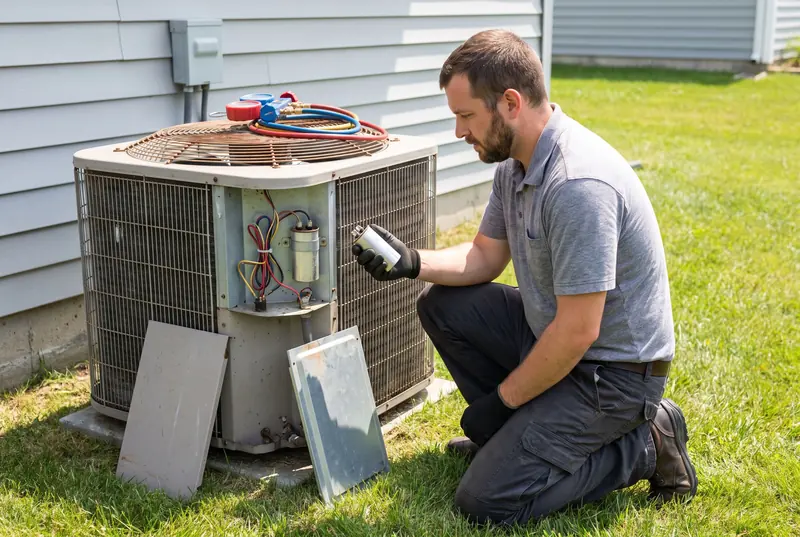
As the peak of summer approach here in Gaithersburg, MD, our air conditioners become hard-working systems of our home comfort. Your AC unit works overtime to keep our indoor spaces cool and comfortable. But like any mechanical system, air conditioners have a lifespan and will eventually begin to show signs of wear and tear, indicating that a major repair or replacement might be on the horizon. Recognizing these warning signs early can save you from a sudden and uncomfortable breakdown on the hottest day of the year, and potentially minimize damage in the long run. Here at Gaithersburg HVAC, we want to help you understand what to look out for.
Reduced Cooling Performance: A Lack of Consistent Cooling?
One of the most noticeable and irritating signs that your air conditioner is struggling is a drop in its cooling capability. You might find yourself adjusting the thermostat lower and lower only to still feel warm or humid indoors. Perhaps certain rooms are much warmer than others. This isn't just about comfort; it indicates a problem within the system. This could stem from various underlying issues. It could be a depleted refrigerant charge, which means your system isn't able to absorb and release heat effectively. Refrigerant is the lifeblood of your AC. Another common culprit is a dirty air filter, which restricts airflow and makes the unit work harder without achieving the desired cooling. Evaporator coils caked with grime can hinder performance, as they cannot efficiently transfer heat. Even a failing compressor, the heart of your AC, could be the cause. If you're experiencing inadequate cooling, it's time to have a professional from Gaithersburg HVAC diagnose the problem.
Strange Noises: What Are Those Unusual Sounds?
Your air conditioner should operate with a relatively consistent, low hum. If you start hearing unexpected auditory disturbances coming from your unit, it's a clear indicator that something is amiss. A grinding or high-pitched squeal frequently suggests problems with worn motor bearings. These bearings, key to rotational movement, can wear down over time, leading to friction and eventual motor failure if not addressed. Repetitive clicking might signal a faulty relay or other electrical trouble. Loud banging or clunking is especially worrisome, as they might suggest a loose part hitting another component. These types of sounds should never be ignored. Addressing these auditory clues promptly can prevent a small issue from becoming a costly repair.
Increased Energy Bills: The Hidden Cost of a Failing AC
A subtle but significant sign of a struggling AC is a gradual rise in your electricity costs. When your energy consumption hasn't changed but your bills are spiking, your AC unit might be working harder than it should to achieve the same level of cooling. This inefficiency can be caused by a variety of factors. As mentioned, a clogged air filter reduces airflow, forcing the fan motor to work overtime. If your ducts are leaking, you're cooling your attic instead of your home, meaning your AC has to run longer to maintain the desired temperature. An aging or improperly sized unit may simply be past its prime. A lack of proper refrigerant makes the system strain. Over time, components like the compressor and fan motors can lose their efficiency. If you're noticing a significant uptick in your energy expenses without a clear explanation, it's worth having Gaithersburg HVAC inspect your AC unit to identify the source of the inefficiency. We can help you understand if a repair or a more efficient replacement makes sense.
Poor Airflow: Weak Air from Your Vents?
Good airflow is crucial for effective cooling and even temperature distribution throughout your home. If you notice that the air coming out of your vents is weak, or if some rooms have a mere whisper of air than others, it's a clear warning of an underlying problem. Several issues can contribute to poor airflow. The most frequent cause is a heavily soiled or obstructed air filter, which restricts the volume of air that can pass through your system. Obstructed return vents can impede the system's ability to pull air in. Problems with the fan motor, separate from the filter, can also cause weak air delivery. A struggling fan motor won't adequately circulate air through your home's ducts. Debris or even physical damage within the ductwork can also restrict air movement. Partially closed dampers can be the reason some rooms get less air. Fixing poor airflow is vital not only for your comfort but also to prevent overworking your AC and reducing its longevity.
AC or Furnace Trouble in Gaithersburg?
Call Gaithersburg HVAC now for fast, professional service and upfront pricing.
(240) 896-8291Excessive Moisture or Leaks: Is Your AC Leaking Water?
While a small amount of condensation is normal during AC operation, excessive moisture or actual puddles around your indoor unit are not. This is a unmistakable indicator that something is wrong. Usually, water leaks are due to an obstructed condensate line. As your AC cools the air, it removes humidity, and this moisture collects in a drain pan and flows out through a condensate line. Algae, dirt, or debris can block this line, causing water to overflow the pan. This can result in damage to your property and even pose electrical risks. Leaks can also originate from a cracked or rusted drain pan. In more severe cases, a refrigerant leak can also cause ice to form on the evaporator coils, which then melts and overflows the drain pan. If you see unexpected wetness around your system, it's imperative to address it quickly to prevent further damage. Gaithersburg HVAC can diagnose the source of the leak and provide a lasting solution.
Frequent Cycling: When Your AC Can't Stay On
Normal AC operation involves consistent cycles of cooling and then resting. If your AC starts turning on and off rapidly, a phenomenon called "short cycling," it's a serious indicator of a problem. Short cycling means your AC isn't completing a full cooling cycle, which is inefficient and puts undue stress on the system. Multiple factors can contribute to short cycling. An oversized unit might short cycle because it cools the air too rapidly, then stops before it can remove humidity effectively. However, more often, short cycling points to a problem like a low refrigerant charge, a dirty air filter, or even a faulty thermostat. A failing compressor or an electrical issue can also lead to short cycling. Whatever the reason, frequent short cycling accelerates wear on AC components, resulting in earlier breakdowns and higher energy use. If your AC is short cycling, it's not operating efficiently or effectively, and it needs professional attention.
Old Age: How Old Is Your AC Unit?
Even without obvious problems, your AC's age is a key indicator of its approaching end-of-life. Typically, central AC units last 10-15 years, with exceptional cases reaching 20 with good maintenance. Once your unit hits or passes this age, it becomes more susceptible to failure and loses efficiency. Older units often use outdated refrigerants like R-22, which are no longer manufactured and are becoming increasingly expensive to service due to supply limitations. The components within older systems are also simply more worn out from years of operation. Though maintenance helps, eventually repairs become too frequent and expensive compared to replacing with a new unit. If your AC is over a decade old and showing symptoms, it's wise to consider replacement options. A modern, efficient model can provide substantial energy savings and enhanced comfort for many years.
Don't Wait for a Complete Breakdown
Being aware of these AC failure signs is key to proactive comfort in your home. Overlooking these warnings can result in a total system failure at the most inconvenient moment, typically during peak heat. Not only is this uncomfortable, but emergency repairs can also be more expensive. If you're experiencing any of these issues with your air conditioning system in Gaithersburg, MD, don't hesitate to contact the experts at Gaithersburg HVAC. Our skilled technicians can diagnose the problem accurately, explain your options clearly, and provide the best solution for your home and budget. We're here to help you stay cool, whether with a repair for your existing unit or a recommendation for an efficient replacement. Call us today at (240) 896-8291 to schedule an inspection or service appointment.
Talk to a Heating & Cooling Expert in Gaithersburg?
Reach Gaithersburg HVAC today for fast, professional service and upfront pricing.
(240) 896-8291